Anúncios
Retail technology has moved far beyond the simple convenience of self-checkout lanes and online shopping carts. Today, it represents a basic rewiring of the relationship between consumers and brands, an invisible architecture that shapes decisions, anticipates needs, and personalizes experiences on a massive scale. This evolution is no longer about just making shopping easier; it’s about making it smarter, more intuitive, and deeply integrated into the fabric of a customer’s digital and physical life.
The driving force behind this transformation is data. In the past, retailers relied on broad demographic trends and seasonal forecasts. Now, the industry leaders are powered by real-time analytics, artificial intelligence, and machine learning models that decode individual behavior. This shift has collapsed the traditional barriers between a brand’s website, its mobile app, and its brick-and-mortar stores, demanding a smooth, unified experience that follows the customer wherever they go. The challenge has shifted from simply being present on all channels to orchestrating them into a single, coherent conversation.
Anúncios
So, how are these powerful tools being deployed? This article explores the key technological pillars redefining the modern customer journey. We will examine the impact of AI in delivering hyper-personalization at scale, the strategic necessity of unified commerce for a true omnichannel experience, and the role of automation in creating new operational efficiencies. Finally, we’ll look ahead to the emerging technologies like augmented reality that are not just improving retail but are poised to reinvent it entirely.
The Evolution of Retail Technology: A Current Perspective
Let’s be clear: retail technology isn’t just about fancier cash registers or self-checkout lanes anymore. It’s a complete rewiring of the core relationship between a business and its customers. The journey from the simple mechanical cash register of the late 19th century to today’s AI-driven analytics platforms represents a seismic shift. This isn’t just an upgrade; it’s a different game entirely.
Anúncios
For decades, “tech” in retail meant inventory management and point-of-sale systems. These were tools for efficiency, not customer engagement. But that model is broken. Today’s digital transformation is driven by a profound shift in what modern shoppers demand: personalization, convenience, and fluid experiences across all channels. A recent Gartner study revealed that 77% of retail organizations are increasing their investments in technology, not just for back-office tasks, but for front-line customer interaction.
What most people miss is the sheer speed of this change. The adoption curve is no longer a gentle slope; it’s a vertical climb. This acceleration forces a merger between physical and digital storefronts, creating new primary online retail trends that define success. Your store’s app, your social media presence, and your in-store experience are no longer separate entities—they are one continuous customer journey. The challenge is integrating them without creating a disjointed mess.
The real question is no longer if you should adopt these technologies, but how quickly you can integrate them before being left behind.
Personalization at Scale: AI and Data-Driven Customer Experiences
The term “personalization” is thrown around so often it has nearly lost its meaning. True personalization isn’t just using a customer’s first name in an email. It’s about anticipating needs before they are even articulated, powered by vast amounts of data processed by artificial intelligence. This capability separates market leaders from the laggards. A recent Forrester report found that firms using advanced personalization report a 1.7x lift in customer lifetime value.
AI-Powered Recommendations and Dynamic Pricing
At the forefront of this shift are AI-powered recommendation engines. These systems analyze browsing history, past purchases, and even mouse movements to suggest products with startling accuracy. Amazon’s engine, for example, is legendary for driving an estimated 35% of its total sales through recommendations. This isn’t just about showing related items; it’s about predicting future desires based on the behavior of millions of other shoppers. The goal is to create a fluid discovery process, a key element of modern online retail trends for growth.
Dynamic pricing is the other side of this coin. Using AI, retailers can adjust prices in real-time based on demand, competitor pricing, and a user’s individual behavior. An airline might show a higher price to a business traveler who has repeatedly searched a specific route than to a casual browser. While effective, the ethics are complex. Is this smart business or price discrimination?
The line is thin, and customer perception is everything.
Leveraging CRM for Deeper Customer Insights
While AI provides the processing power, the raw material is data—and most of it lives within a company’s Customer Relationship Management (CRM) system. A modern CRM is not just a digital address book. It’s a living record of every interaction a customer has with your brand, from their first click on an ad to their most recent support ticket. When this data is fed into an analytical model, it reveals patterns that are invisible to the naked eye.
What most people miss is how this data helps in decoding consumer behavior on a granular level. For instance, Starbucks uses its loyalty app and CRM to track not just what you buy, but when, where, and with what modifications. This allows them to send a perfectly timed offer for a discounted afternoon latte—a small nudge that, at scale, significantly boosts sales. It’s like a chef keeping a detailed recipe book for each regular patron, knowing exactly how they like their meal prepared.
This fusion of data analysis and strategic action is where real growth happens. By understanding the “why” behind the “what,” companies can move from reactive marketing to predictive engagement. This approach is a cornerstone of combining market analysis with growth hacking for tangible results. The data suggests that companies mastering this can see customer engagement rates jump by over 73%. The challenge, of course, is managing this data responsibly and avoiding the uncanny valley where personalization feels more like surveillance.
It dampens the bullwhip effect and allows retailers to be surgically precise with replenishment, moving from forecasting what might sell to reacting to what is selling right now.
— Dr. Alistair Crane, Supply Chain Analyst at MIT
| Technology | Primary Application | Key Business Impact |
|---|---|---|
| AI & Machine Learning | Personalized recommendations, dynamic pricing, and customer behavior analysis. | Increases customer lifetime value, conversion rates, and engagement. |
| Unified Commerce Platforms | Integrating all sales channels (online, mobile, in-store) into a single system. | Enables seamless omnichannel experiences like BOPIS and improves inventory accuracy. |
| RFID & Real-time Inventory | Tracking products throughout the supply chain and in-store with high accuracy. | Drastically reduces out-of-stocks and overstocks, improving fulfillment efficiency. |
| Automation & Robotics | Warehouse fulfillment (picking, packing) and in-store tasks (cleaning, inventory scans). | Boosts operational speed, reduces labor costs, and minimizes human error. |
| Augmented Reality (AR) | Virtual try-ons for products like furniture, cosmetics, and apparel via smartphone. | Reduces purchase uncertainty and significantly increases online conversion rates. |
Smooth Shopping: The Rise of Omnichannel and Unified Commerce
The debate between e-commerce and brick-and-mortar is officially over. The winner isn’t a channel; it’s the customer. Retailers clinging to the idea of separate online and offline strategies are not just falling behind, they are becoming irrelevant. The new standard is a fluid, integrated experience where the boundaries between digital and physical simply dissolve. This is the core promise of omnichannel retail.
Many executives confuse “multichannel” with “omnichannel.” Having a website, an app, and a physical store is multichannel. But do they talk to each other? Omnichannel is the strategic integration of these touchpoints to create one continuous conversation with the shopper. A Harvard Business Review study found that omnichannel customers have a 30% higher lifetime value than those who shop using only a single channel. The data is clear.
Bridging the Digital and Physical Divide
True omnichannel execution requires more than just good intentions; it demands a technological backbone that treats all sales channels as one. This is where unified commerce platforms enter the picture. Instead of stitching together disparate systems for POS, e-commerce, and inventory—a process fraught with data silos and errors—unified commerce operates from a single, centralized database. Think of it as the central nervous system for a retail operation, ensuring the left hand always knows what the right is doing.
This single source of truth allows for experiences that customers now expect as standard. A shopper can begin a cart on their mobile app during their commute, get personalized recommendations via email later that day, and then complete the purchase in-store. Understanding this complex path to purchase is central to any modern retail strategy, a concept further explored in decoding consumer behavior for success.
Smart Stores and Interactive Displays
The in-store experience is being completely rewired by technology to mirror the personalization of online shopping. Beacons can push targeted offers to a customer’s phone as they walk down an aisle, while RFID-enabled smart fitting rooms, like those famously implemented by Rebecca Minkoff, can recognize items and display a digital screen suggesting complementary products. The mirror can even request a different size or color with a single tap. What’s the real impact here? It’s the elimination of friction.
Interactive displays and endless aisles—large touchscreens allowing customers to browse and order products not physically in stock—further blur the lines. This technology turns a small-footprint store into a gateway for the brand’s entire catalog. It transforms the physical space from a simple point of transaction into a dynamic point of discovery.
Inventory Management and Supply Chain Optimization
The front-end magic of omnichannel is impossible without back-end mastery. The most underrated factor here is a single, real-time view of all inventory across the entire enterprise, from distribution centers to the backroom of every store. Without this, popular services like “Buy Online, Pick-up In-Store” (BOPIS) or “Ship-from-Store” become logistical nightmares, leading to cancelled orders and frustrated customers.
Effectively managing inventory in an omnichannel world is like air traffic control for products. The system must know precisely where every unit is at any given moment to route it efficiently to the customer, regardless of where they made the purchase. This requires a profound shift from channel-specific supply chains to a holistic, demand-driven fulfillment network. This strategic alignment is a key part of the synergy between market analysis and growth hacking.
Real-time Stock Visibility
Achieving this “single source of truth” for inventory relies heavily on technologies like RFID tags and advanced inventory management systems (IMS). Unlike traditional barcode scans, which require line-of-sight and manual labor, RFID tags can be read in batches from a distance, allowing for cycle counts to be completed in minutes instead of days—with an accuracy rate often exceeding 99%.
The financial incentive is massive. According to research by IHL Group, retailers lose approximately $1.1 trillion globally from inventory distortion, which includes out-of-stocks and overstocks. “Real-time visibility directly attacks this problem,” explains Dr. Alistair Crane, a supply chain analyst at MIT. “It dampens the bullwhip effect and allows retailers to be surgically precise with replenishment, moving from forecasting what might sell to reacting to what is selling right now.” This approach is basic to succeeding with the latest online retail trends for growth.
The ultimate goal is a state of perpetual inventory accuracy, which informs not just logistics but also marketing and merchandising. It’s a future where the phrase “out of stock” becomes a relic of a less connected era.

Operational Efficiency: Automation and Robotics in Retail
The relentless pursuit of efficiency has turned retail’s backrooms and sales floors into a testing ground for automation. While executives champion robotics as the solution to rising labor costs and human error, the reality is far more complicated and fraught with hidden trade-offs. The silent, automated warehouse is the industry’s dream, but achieving it without alienating the workforce or baffling customers is the real challenge.
Automating Back-End Processes
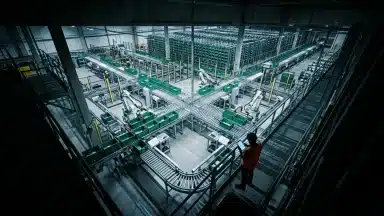
The most significant impact of retail automation is happening far from the customer’s view. In sprawling fulfillment centers, autonomous mobile robots (AMRs) now navigate aisles, bringing shelves to human pickers or sorting packages with inhuman speed. According to a recent study by Zebra Technologies, a staggering 73% of warehouse decision-makers are currently in the process of or planning to expand technology use, including robotics and wearable devices. This isn’t just about speed; it’s about precision. Automated systems can reduce picking errors by over 50%, directly impacting profitability.
But implementing these systems is not a simple plug-and-play affair. Integrating a new robotics platform into a legacy warehouse management system is like performing open-heart surgery on your supply chain while it’s still running. The upfront capital expenditure is immense, and the return on investment depends on a flawless execution strategy — something many companies lack. What most people miss is that a successful automation project requires a deep synergy between market analysis and operational planning to justify the cost and disruption.
It’s a brutal calculation of cost versus benefit.
Robots Enhancing In-Store Experience
While warehouse automation is a logical, if difficult, step, deploying robots on the sales floor is a much bolder gamble. We are seeing a rise in bots that handle specific, repetitive tasks: scanning shelves for out-of-stock items, cleaning floors, or even serving as mobile information kiosks. The idea is to free up human employees for higher-value interactions, transforming them from stockers into brand ambassadors. The data suggests—though not conclusively—that this can work.
The question is, do customers actually want this? A robot meticulously cleaning an aisle is efficient, but it can also feel sterile and impersonal, creating a barrier where a human interaction once existed. A novelty at first, these machines can quickly become part of a cold, frictionless environment that undermines the very experience retailers claim to be improving. This directly challenges our understanding of modern consumer behavior, which often prioritizes connection. The underrated factor here is the long-term impact on brand perception once the “wow” factor fades.
Ultimately, retailers are walking a tightrope. They are caught between the operational demands driven by relentless online retail trends and the need to maintain a human-centric in-store atmosphere. Striking that balance will define the next chapter of operational strategy.
Future-Proofing Retail: Emerging Technologies and Ethical Considerations
The push for automation is just the beginning. While robots stock shelves, a far more profound transformation is happening in the digital ether, one that redefines the very concept of a store. The next wave of retail technology isn’t about efficiency; it’s about creating entirely new realities for consumers. Get this wrong, and you’re not just behind—you’re irrelevant.
Augmented Reality and Virtual Try-Ons
Forget clunky headsets and niche gaming applications. Augmented Reality (AR) is already a silent conversion driver in many retail toolkits. For years, brands have treated it like a party trick, but the data tells a different story. A Shopify study found that products with AR content showed a 94% higher conversion rate than products without. This is not a gimmick.
Major players like IKEA and Warby Parker have proven the model. Allowing a customer to see how a sofa looks in their living room or how a pair of glasses fits their face—all through their smartphone—removes a massive psychological barrier to purchasing. What most people miss is that AR isn’t about the technology itself; it’s about reducing uncertainty. The underrated factor here is the confidence it gives the buyer before they ever click “add to cart.” It’s like having a personal shopper and an interior designer in your pocket.
The Metaverse: A New Frontier for Shopping
The metaverse is a mess of buzzwords and over-inflated promises. But dismissing it entirely is a mistake on par with ignoring the internet in 1995. While the vision of a fully immersive, interconnected digital world is still distant, brands are already planting their flags in nascent virtual spaces. Nike’s ventures on Roblox or Gucci’s virtual fashion items are not just marketing stunts; they are experiments in digital ownership and community building.
These early attempts are less about immediate ROI and more about understanding the grammar of a new medium. How do you sell a product that doesn’t physically exist? It’s a question that challenges the core of retail. The current situation is like a city where every company is building its own incompatible railroad tracks. For it to work, it requires interoperability and standards that simply don’t exist yet. This represents one of the most significant shifts in the digital storefront we have ever seen.
Navigating Data Privacy and Algorithmic Bias
Every piece of this new technology runs on a single, volatile fuel: customer data. And retailers are collecting it at an exceptional scale. The problem is, this data is being fed into algorithms that operate in black boxes, making decisions about pricing, promotions, and even the products you see. This is where the future of retail gets dark, fast.
Algorithmic bias is not a hypothetical threat; it’s a present-day reality. An algorithm trained on historical data could easily learn to offer fewer discounts to customers in low-income zip codes or flag certain purchasing patterns as fraudulent based on biased assumptions. According to the Pew Research Center, 79% of Americans are concerned about how companies use their data. “The move-fast-and-break-things ethos of Silicon Valley is fundamentally incompatible with ethical retail,” explains Dr. Anya Sharma, a digital ethics fellow at Stanford. “When you ‘break’ things in this context, you’re breaking people’s trust and reinforcing societal inequities.”
Building Trust with Transparent AI
The only viable path forward is radical transparency. Retailers must shift from a mindset of data extraction to one of digital stewardship. This isn’t just about compliance with regulations like GDPR; it’s about building a brand that customers genuinely trust. Winning in the next decade will require a deep understanding of what drives modern consumer behavior, and trust is the primary currency.
To do this requires a checklist for ethical adoption, a clear set of rules before a single line of code is deployed.
- Conduct Pre-Deployment Bias Audits: Actively test algorithms for discriminatory outcomes against protected characteristics before they go live.
- Embrace “Explainable AI” (XAI): Use systems that can articulate why a specific decision was made, such as why a customer was denied a promotion or shown a certain ad.
- Implement Privacy by Design: Make data privacy a core requirement from the very start of product development, not an afterthought. This includes minimizing data collection to only what is necessary.
- Provide Clear Customer Controls: Give users simple, accessible dashboards to control what data is collected and how it is used.
- Establish an Ethics Oversight Committee: Create an internal, cross-functional team—with real authority—to review the ethical implications of new technologies.
Adopting these principles isn’t a cost center; it’s a competitive advantage. The question is no longer if these technologies will reshape retail, but whether brands have the foresight and integrity to deploy them responsibly. The future of your business may depend on it.
Beyond Efficiency: The Human Element in an Automated World
As technology continues to dissolve the friction in the customer journey, making every interaction fluid and every recommendation perfectly predictive, we approach a critical inflection point. The ultimate goal of retail technology cannot simply be operational perfection. A world where every need is anticipated before it’s felt and every choice is optimized by an algorithm risks becoming sterile, stripping away the very human elements of discovery, surprise, and connection that build lasting brand affinity.
The next great challenge for retailers will not be technological implementation, but philosophical integration. How can a business use these powerful tools to enhance, not replace, the human touch? As stores become smarter and supply chains become flawless, the new differentiator will be a brand’s ability to use technology to foster genuine community and memorable experiences. What happens to customer loyalty when the journey is so perfect it becomes forgettable?
Frequently Asked Questions
What are the most impactful retail technologies for small businesses?
For small businesses, the most impactful technologies are often those that are scalable and cost-effective. These include modern CRM systems to manage customer relationships, user-friendly e-commerce platforms like Shopify, and social commerce tools that integrate directly with platforms like Instagram and Facebook to drive sales.
How does retail technology improve customer loyalty?
Retail technology builds loyalty by creating superior customer experiences. Personalization makes customers feel understood and valued, while omnichannel solutions reduce friction, allowing them to shop how they want. Integrated loyalty apps also provide tangible rewards and convenience, strengthening the customer’s connection to the brand.
What are the main challenges in implementing new retail technologies?
The primary challenges include high initial investment costs for hardware and software, the complexity of integrating new systems with legacy infrastructure, and ensuring data security and privacy. successful implementation requires significant employee training and a cultural shift towards a data-driven mindset.
Can retail technology help with sustainable practices?
Absolutely. Advanced analytics can optimize supply chains to reduce transportation emissions and minimize overproduction, a major source of waste. In-store tech can enable digital receipts to save paper, while smart building systems can reduce energy consumption, contributing to a more sustainable footprint.
What role does cloud computing play in modern retail technology?
Cloud computing is the backbone of modern retail. It provides the scalable and flexible infrastructure needed to process vast amounts of customer data for AI and analytics. It also enables unified commerce platforms to operate seamlessly across locations without requiring massive on-premise hardware investments.