
Anúncios
The US subscription market in 2025 navigates a complex interplay of consumer fatigue and ingrained loyalty, driven by evolving digital habits and economic pressures. Understanding this balance is crucial for businesses aiming to sustain and grow recurring revenue models.
Anúncios
As we approach 2025, the landscape of recurring services in the United States presents a fascinating paradox: are consumers experiencing widespread subscription fatigue or loyalty?
Anúncios
The evolving subscription economy landscape
The subscription economy has exploded over the past decade, transforming how US consumers access everything from entertainment to essential software. What began as a niche offering has become an integrated part of daily life, creating both immense opportunities and significant challenges for businesses.
This rapid expansion has led to a saturation point in many categories, forcing companies to re-evaluate their strategies. Understanding the underlying psychological and economic factors influencing consumer choices is paramount for sustained success in this dynamic environment. The market is no longer just about acquiring new subscribers; it’s about retention and perceived value.
Defining subscription fatigue and loyalty
Subscription fatigue refers to the feeling of being overwhelmed by the sheer number of recurring payments and the cognitive load associated with managing multiple subscriptions. It often leads to cancellations or a reluctance to sign up for new services. Conversely, subscription loyalty signifies a strong, sustained commitment to specific services, driven by perceived value, convenience, and emotional connection.
- Subscription fatigue indicators: High churn rates, difficulty in justifying costs, forgotten subscriptions, and a general reluctance to add new services.
- Subscription loyalty drivers: Unique content, personalized experiences, seamless integration, excellent customer service, and strong brand affinity.
- Market saturation: The abundance of similar services in categories like streaming and fitness contributes significantly to consumer overload.
The distinction between these two states is critical for businesses. Companies that fail to recognize the signs of fatigue risk losing valuable customers. Those that cultivate loyalty, however, can build resilient revenue streams and foster long-term relationships with their user base.
In essence, the subscription economy is maturing, and with that maturity comes a greater need for strategic differentiation and a deeper understanding of consumer psychology. The days of simply offering a recurring service and expecting growth are over; now, it’s about providing undeniable, continuous value.
Financial impact on US households
The cumulative cost of multiple subscriptions can significantly impact household budgets across the US. While individual services may seem affordable, their combined expense often adds up to a substantial monthly outlay, influencing financial decisions and consumer behavior.
Many consumers underestimate their total subscription spending, leading to ‘bill shock’ when they finally review their statements. This financial burden is a primary driver of subscription fatigue, as households look for ways to optimize their expenditures without sacrificing essential services or desired entertainment.
Average monthly spending and budget allocation
Recent data indicates that the average US household spends a considerable portion of its discretionary income on subscriptions. This spending is distributed across various categories, including entertainment, software, lifestyle, and health services. The allocation often reflects individual priorities but is increasingly scrutinized as economic pressures mount.
- Entertainment: Streaming video, music, and gaming platforms remain dominant, often with households subscribing to multiple providers.
- Software and productivity: Cloud storage, creative suites, and professional tools are indispensable for many, especially with the rise of remote work.
- Lifestyle and wellness: Fitness apps, meal kits, and personalized coaching services are gaining traction, appealing to health-conscious consumers.
The challenge for consumers lies in balancing perceived value against actual cost. A service might offer convenience or unique content, but if it pushes a household’s budget past its comfort zone, it becomes a candidate for cancellation. Businesses, therefore, must demonstrate tangible benefits that justify the recurring expense, especially in a competitive market.
Understanding the financial implications is not just about the consumer; it’s also about the broader economic health of the subscription industry. As disposable incomes fluctuate, companies offering recurring services must adapt their pricing models and value propositions to remain attractive and sustainable.
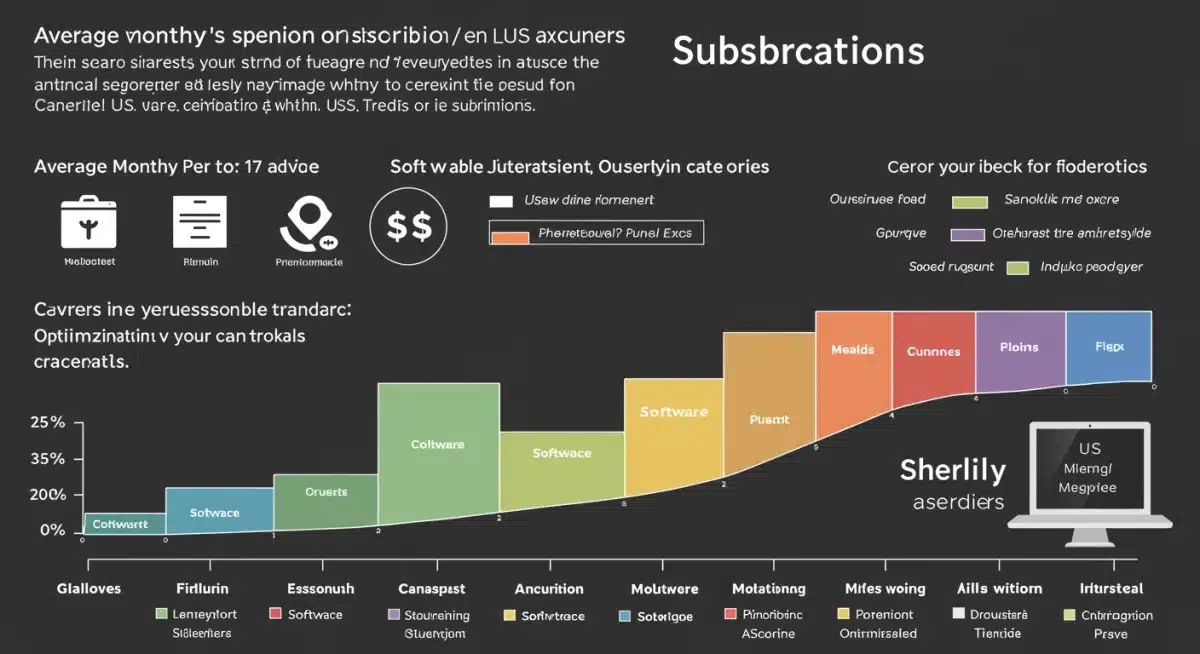
The financial impact also extends to the macroeconomy, influencing consumer spending patterns and industry growth. Businesses need to analyze these trends closely to predict market shifts and strategize accordingly, ensuring their offerings align with evolving economic realities.
Key trends shaping consumer choices in 2025
Several significant trends are influencing how US consumers interact with recurring services heading into 2025. These trends are shaping expectations, driving demand for personalization, and redefining what constitutes value in the subscription model.
From the demand for flexibility to the rising importance of ethical considerations, businesses must stay attuned to these shifts to maintain relevance and foster loyalty among their subscriber base. Ignoring these trends could lead to increased churn and a diminishing market share.
Personalization and customization
Consumers are increasingly seeking highly personalized experiences. Generic offerings are less appealing than services that can be tailored to individual preferences, usage patterns, and specific needs. This demand extends beyond content recommendations to pricing tiers, feature sets, and even customer support interactions.
- Dynamic pricing: Tiered subscription models that allow users to pay only for what they need or use.
- Content curation: Algorithms that truly understand user tastes and deliver highly relevant recommendations.
- Flexible bundling: Options to combine or swap services within a larger subscription ecosystem.
The ability to customize a subscription not only enhances its perceived value but also reduces the likelihood of fatigue. When a service feels uniquely designed for an individual, it becomes harder to cancel. Data analytics plays a crucial role here, enabling companies to understand and anticipate consumer desires.
Another trend is the growing emphasis on convenience and seamless integration. Services that effortlessly fit into a consumer’s digital ecosystem, offering cross-device compatibility and intuitive user interfaces, tend to foster greater loyalty. Frictionless experiences are no longer a luxury but an expectation.
Furthermore, ethical considerations and brand values are increasingly influencing subscription decisions. Consumers are more likely to support companies that align with their personal values, whether it’s sustainability, data privacy, or social responsibility. Transparency and corporate integrity are becoming significant competitive differentiators.
Strategies for fostering loyalty and combating fatigue
In a saturated market, businesses need robust strategies to not only attract but also retain subscribers. Overcoming subscription fatigue requires a proactive approach centered on delivering continuous value, enhancing user experience, and building genuine customer relationships.
Simply offering a free trial or a discounted first month is no longer sufficient. Companies must think long-term, focusing on the entire customer lifecycle and identifying touchpoints where value can be reinforced and loyalty strengthened.
Value proposition reinforcement
Regularly reminding subscribers of the value they receive is crucial. This can be done through personalized communication, highlighting new features, exclusive content, or usage summaries that demonstrate how the service benefits them. Proactive engagement helps prevent subscribers from forgetting why they signed up in the first place.
- Personalized communication: Tailored emails or in-app messages showcasing benefits relevant to the individual user.
- Feature updates: Regular announcements of new functionalities or content that add to the service’s utility.
- Usage analytics: Providing users with insights into how they are utilizing the service and its benefits.
Beyond communication, the user experience itself must be consistently excellent. This includes intuitive interfaces, reliable performance, and responsive customer support. A frustrating experience can quickly erode loyalty, even for a service that initially offered high value. Investing in UX/UI design and robust infrastructure is thus a non-negotiable.
Another effective strategy involves creating a sense of community around the service. This could be through forums, exclusive events, or social media engagement. When users feel part of something larger, their emotional connection to the brand deepens, making them less likely to churn.
Ultimately, combating fatigue and fostering loyalty is about evolving with the consumer. Businesses that are agile, responsive to feedback, and continuously innovate their offerings will be best positioned to thrive in the competitive subscription economy of 2025.
The role of data analytics and AI
Data analytics and artificial intelligence (AI) are no longer just buzzwords; they are indispensable tools for understanding and influencing US consumer behavior in recurring services. Their role in predicting churn, personalizing experiences, and optimizing offerings is becoming increasingly sophisticated.
For businesses aiming to navigate the complexities of subscription fatigue and loyalty, leveraging these technologies provides a critical competitive edge. They enable a level of insight and responsiveness that manual analysis simply cannot match, leading to more informed decision-making.
Predictive analytics for churn prevention
AI-powered predictive models can analyze vast datasets of user behavior to identify patterns indicative of potential churn. By flagging at-risk subscribers, companies can intervene proactively with targeted offers, personalized support, or re-engagement campaigns, significantly improving retention rates.
- Behavioral patterns: Identifying reduced usage, changes in feature engagement, or negative feedback as early warning signs.
- Customer segmentation: Grouping users based on loyalty levels and risk factors to tailor retention efforts.
- Personalized interventions: Delivering customized messages or incentives to prevent cancellations before they occur.
Beyond churn prediction, AI enhances personalization at scale. By analyzing individual preferences, AI algorithms can curate content, recommend products, and even adjust pricing dynamically to maximize perceived value for each subscriber. This level of customization is a powerful antidote to subscription fatigue, making services feel more relevant and indispensable.
Furthermore, AI can optimize pricing strategies by identifying the optimal price points for different customer segments and service tiers. This ensures that offerings remain competitive and attractive, balancing revenue generation with subscriber affordability and preventing price-driven cancellations.
The integration of AI also streamlines customer service, with chatbots and virtual assistants handling routine inquiries, freeing up human agents for more complex issues. This efficiency contributes to a smoother overall customer experience, which is a significant factor in building and maintaining loyalty.
Future outlook and adaptation for businesses
Looking ahead to 2025 and beyond, the subscription economy will continue to evolve, presenting both challenges and opportunities for businesses. Adaptability, innovation, and a deep understanding of the US consumer will be crucial for sustained success in this dynamic market.
Companies that prioritize long-term customer relationships over short-term gains, and those willing to rethink traditional subscription models, will be best positioned to thrive amidst the ongoing shifts in consumer sentiment and economic conditions.
Emerging models and market shifts
We are likely to see the emergence of more flexible, hybrid subscription models that combine elements of pay-per-use, ad-supported tiers, and traditional recurring payments. This flexibility will cater to a broader range of consumer preferences and financial situations, directly addressing concerns about subscription fatigue.
- Hybrid models: Blending subscription access with transactional purchases or consumption-based billing.
- Bundle customization: Allowing users to create their own service bundles from a curated selection of offerings.
- Value-driven innovation: Focusing on unique features or benefits that cannot be easily replicated by competitors.
The emphasis will shift even more towards true value creation. Services that genuinely simplify lives, enhance experiences, or offer unique benefits will stand out. Businesses will need to continuously innovate, not just in terms of content or features, but also in how they engage with and understand their customers.
Sustainability and ethical practices will also play an increasingly important role. Consumers are becoming more discerning, opting for brands that demonstrate social responsibility and transparency. Integrating these values into the core business model will attract and retain a growing segment of the market.
Ultimately, the future of recurring services in the US will depend on businesses’ ability to move beyond simply collecting monthly fees. It will require a commitment to continuous improvement, deep customer insight, and a willingness to adapt to an ever-changing consumer landscape, ensuring that loyalty triumphs over fatigue.
| Key Aspect | Brief Description |
|---|---|
| Subscription Fatigue | Overwhelm from too many subscriptions, leading to cancellations and reluctance for new sign-ups. Driven by cost and management complexity. |
| Consumer Loyalty | Strong, sustained commitment to services due to perceived value, personalization, and seamless experience. Crucial for retention. |
| Financial Impact | Cumulative costs of subscriptions significantly affect household budgets, driving optimization and cancellation decisions. |
| Strategic Imperatives | Businesses must focus on personalization, continuous value, data analytics, and flexible models to foster loyalty and combat fatigue. |
Frequently asked questions about US consumer subscriptions
Subscription fatigue is primarily driven by the increasing number of services available, leading to cognitive overload and difficulty in managing multiple recurring payments. The cumulative cost and a lack of perceived unique value from each service also contribute significantly to this phenomenon.
Fostering loyalty requires continuous delivery of value, highly personalized experiences, and excellent customer service. Businesses should focus on unique content, seamless user interfaces, and actively engaging with subscribers to reinforce benefits and build emotional connections to the brand.
Subscriptions can significantly impact US household budgets, often leading to higher monthly outlays than anticipated. This cumulative cost forces consumers to evaluate perceived value against actual expense, potentially leading to cancellations or a more selective approach to new subscriptions.
AI is crucial for predicting churn, personalizing user experiences, and optimizing pricing strategies. It enables businesses to analyze behavioral data, identify at-risk subscribers, and deliver tailored interventions, thereby enhancing retention and making services more relevant to individual needs.
Yes, hybrid models combining elements of recurring payments with pay-per-use or ad-supported tiers are gaining traction. These flexible approaches cater to diverse consumer preferences and financial situations, offering more choice and potentially mitigating subscription fatigue by allowing greater control over spending.
Conclusion
The dynamic interplay between subscription fatigue and loyalty will define the recurring services market in the US through 2025 and beyond. Businesses that succeed will be those capable of moving beyond simple transaction models, embracing deep consumer insights, and continuously adapting their value propositions. The future demands personalized experiences, flexible offerings, and a steadfast commitment to delivering undeniable, evolving value. Companies must leverage data analytics and AI to understand individual needs, predict behaviors, and foster genuine connections, ensuring that their services remain indispensable rather than just another monthly bill.